Understanding pH in Water
Water quality and pH are often mentioned in the same sentence. pH is an indication of the acidity of a solution. It is determined by the number of free hydrogen ions (H⁺) in a solution. The pH of water can vary between 0–14. Where pH < 7, it is acidic; when pH > 7, it is basic; and when pH = 7, it is neutral.
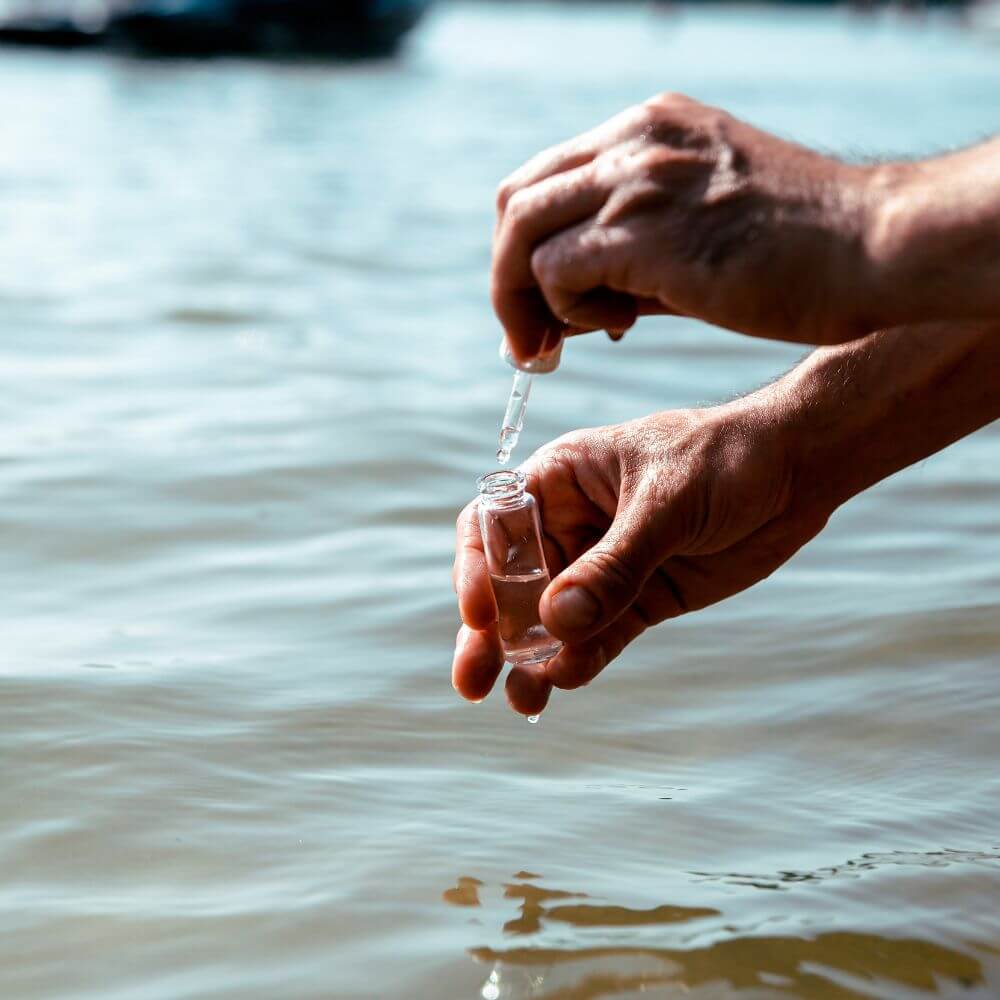
pH is a logarithmic function, which means that when the pH falls by 1 unit, the solution becomes 10 times more acidic. When the pH falls by 3 units, the solution becomes 1,000 times more acidic. The pH of spray water can easily be measured with a portable Eutech pH meter available at Hygrotech.
What is Electrical Conductivity (EC)?
A common mistake made by farmers is referring to water as “hard” based on a high pH and high salt content. Electrical conductivity (EC) measures the capacity of water to conduct an electrical current and is directly related to the total dissolved salts (TDS) in water. Salts dissolve into positively charged ions and negatively charged ions, which conduct electricity.
The EC of spray water can easily be measured with a portable Eutech EC meter available at Hygrotech. Although this test does not identify the ions present, it does show if there is a potential problem.
EC vs Hard Water
Do not confuse salt concentration with the hardness of water. Hard water is caused by positively charged minerals, primarily calcium (Ca²⁺) and magnesium (Mg²⁺), which are both multivalent ions.
Monovalent ions like Na⁺ and Cl⁻ also form part of the EC of a solution, but do not contribute to the hardness of water. It is possible to have an EC > 225 mS/m, which would normally be considered hard water, but it might be that only 25 mS/m comes from Ca²⁺ and Mg²⁺, in which case it should actually be considered soft water. Generally, spray water with an EC < 75 mS/m is considered soft water.
When the EC of spray water is higher than 75 mS/m, it is advisable to test for antagonising cations like calcium and magnesium at an external environmental laboratory.
How Hard Water Affects Pesticides
A greater concentration of Ca²⁺ and Mg²⁺ results in hard water. If a pesticide is negatively charged, these minerals will bind to the pesticide, reducing its effectiveness. Herbicides like Glyphosate are subject to these types of bonds in water.
To overcome this effect, ammonium sulphate (AMS) is used to increase the herbicide’s efficacy. AMS also binds to cations and adjusts the pH so that the herbicide is taken up across the leaf surface.
Understanding Buffer Capacity
It is also important to consider the buffer capacity of the spray water. Buffer capacity basically tells you how much acid or base can be added before the pH starts changing. You might find that when adding the recommended amount of acidifier to your spray water, the pH stays the same. You might even add double the recommended dose before the pH drops.
If your spray water has a high buffer capacity, you would need to add a large amount of acidifier before the pH starts to change. If your spray water has a low buffer capacity, the pH will drop instantly when adding an acidifier, and you might over-acidify the water without realising it.
Carbonates and Bicarbonates in Spray Water
Carbonate (CO₃²⁻) and bicarbonate (HCO₃⁻) ions are the main culprits influencing buffer capacity. This is because bicarbonates and carbonates react with the hydrogen ions (H⁺) from the acid, preventing them from lowering the pH. Once all the bicarbonates and carbonates have reacted with H⁺, the acid is free to lower the pH.
(Written by San-Mari Louw)